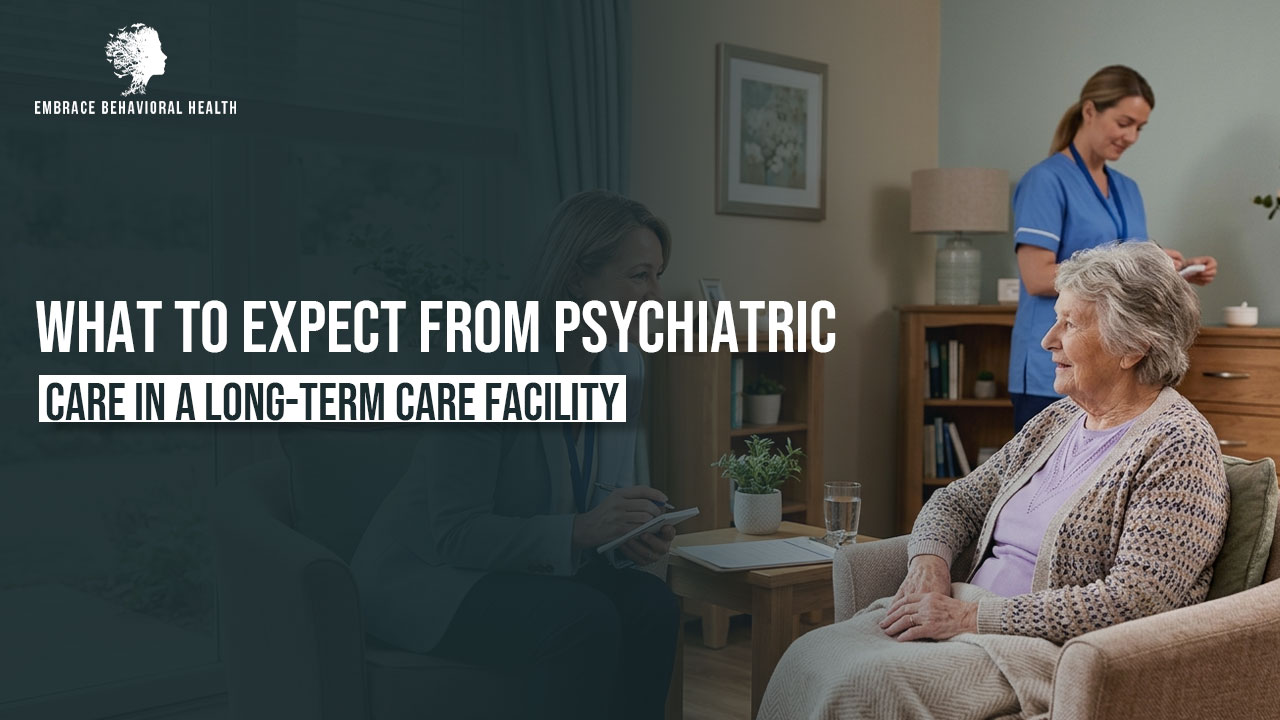
What to Expect From Psychiatric Care in a Long-Term Care Facility | Embrace Behavioral Health
When a loved one moves into a long-term care facility, families often focus on physical health, mobility, nutrition, daily routines. But mental health is just as critical, and it is frequently overlooked.
Depression, anxiety, dementia-related behavioral changes, PTSD, and mood disorders are common among residents in nursing homes and long-term care settings. Without proper psychiatric support, these conditions can worsen, leading to increased hospitalizations, medication complications, and a significantly lower quality of life.
At Embrace Behavioral Health, we provide compassionate, evidence-based psychiatric care directly inside long-term care facilities in the Libertyville, IL area. In this article, we break down exactly what that care looks like, and why it matters for residents, families, and facility staff.
Why Mental Health Care Matters in Long-Term Care Settings
Long-term care residents are among the most vulnerable populations when it comes to mental health. Research consistently shows that a significant percentage of nursing home residents experience depression or anxiety, yet many go undiagnosed and untreated.
This is not a small problem. Untreated psychiatric conditions in LTC settings can lead to:
Increased use of unnecessary psychotropic medications
Higher rates of falls, agitation, and behavioral incidents
More frequent hospitalizations and emergency visits
Reduced cooperation with daily care routines
Diminished quality of life and social withdrawal
Bringing qualified psychiatric care into the facility, rather than relying on rushed outpatient referrals, changes outcomes dramatically.
What Psychiatric Care in a Long-Term Care Facility Actually Looks Like

When Embrace Behavioral Health partners with a long-term care facility, residents and families can expect a structured, patient-centered approach built around three core services.
1. Comprehensive Psychiatric Evaluation
Every resident receiving psychiatric services begins with a thorough evaluation. This is not a quick check-in, it is a comprehensive assessment designed to understand the resident's full mental health history, current symptoms, existing medications, and behavioral patterns.
Using modern screening tools that can assess over 80 mental health conditions, our team builds an accurate clinical picture. From there, an individualized treatment plan is developed, one that is specific to each resident's needs, not a one-size-fits-all protocol.
2. Ongoing Medication Management
Managing psychiatric medications in older adults is complex. Aging bodies process medications differently, and many long-term care residents are already taking multiple medications for physical health conditions. Drug interactions, side effects, and dosing errors can have serious consequences.
Our psychiatric team provides ongoing medication monitoring and adjustments based on each resident's response. We also have pharmacy consultants on staff who collaborate with our practitioners in monthly medication reviews, optimizing regimens, reducing hospitalization risk, and improving overall care quality.
Importantly, our pharmacy consultation services are designed to complement, not replace, any existing pharmacy services your facility may already have in place.
3. Gradual Dose Reduction (GDR)
Gradual dose reduction is one of the most important, and most frequently cited, requirements in long-term care psychiatric oversight. CMS (Centers for Medicare and Medicaid Services) regulations require facilities to demonstrate that psychotropic medications are clinically necessary and that efforts are being made to reduce or eliminate them when appropriate.
Our team carefully evaluates, documents, and manages GDR processes in full compliance with state and CMS regulations. This protects residents from the harms of unnecessary medication use, and it protects facilities from survey deficiencies and regulatory tags.
Conditions We Treat in Long-Term Care
Our psychiatric team is experienced in treating a wide range of mental health conditions commonly seen in LTC populations, including:
Depression and persistent low mood
Anxiety disorders and panic
Dementia and associated behavioral symptoms (agitation, aggression, sundowning)
Bipolar disorder
PTSD
Mood disorders
Sleep disturbances and insomnia
Other behavioral concerns specific to aging populations
What Families Should Know
If your loved one is a resident in a long-term care facility, you may have questions about how their mental health is being addressed. Here are a few important things to keep in mind:
Your loved one does not need to stop seeing their primary care provider. We work collaboratively with PCPs and other clinicians to provide integrated, coordinated care.
Insurance coverage is broad. We accept Medicare and all Medicaid plans. Patient out-of-pocket costs, if any, are typically minimal.
You can reach the treating provider. Facility staff have direct access to the treating provider's phone, ensuring timely communication when concerns arise.
Visits are regular and consistent, monthly or weekly depending on resident need and clinical volume.
What Long-Term Care Facilities Gain From a Psychiatric Partnership
For administrators and clinical directors, partnering with an outside psychiatric provider like Embrace Behavioral Health delivers real, measurable benefits:
Reduced survey deficiencies related to psychotropic medication use
Better documentation and regulatory compliance for GDR requirements
Lower hospitalization rates through proactive psychiatric management
Direct provider access for staff, improving response time to behavioral incidents
Improved resident outcomes and satisfaction scores
Staff support, when residents are more stable, care teams experience less stress and burnout
Ready to Learn More?
Embrace Behavioral Health is currently partnering with long-term care facilities in the Libertyville and greater Chicago area. Whether you are a facility administrator exploring psychiatric partnership options, or a family member seeking better mental health care for a loved one in a nursing home, we are here to help.
Visit our Long-Term Care to learn more and submit a partnership inquiry, or call us directly at (847) 558-1388.
FAQs: Psychiatric Care in Long-Term Care Facilities
What psychiatric services does Embrace Behavioral Health provide in long-term care facilities?
We provide comprehensive psychiatric evaluations, ongoing medication management, treatment planning, gradual dose reduction (GDR), and regular follow-up care, all delivered directly inside the facility.
How often does a provider visit the facility?
We offer monthly or weekly visits depending on resident volume and clinical need. Scheduling is flexible and built around what the facility and its residents require.
Do you offer therapy or group counseling in LTC facilities?
Our primary focus is psychiatric care and medication management. We collaborate with facility teams and external providers to support additional therapeutic services as needed.
What conditions do you treat in long-term care settings?
We treat depression, anxiety, PTSD, bipolar disorder, mood disorders, dementia-related behavioral symptoms, insomnia, and other behavioral concerns commonly seen in LTC populations.